When Surfing was a little rough around the edges.
There was a time when going surfing involved a fair bit of guesswork.
You didn't wake up, grab your phone and check six different forecasts, three live cameras, wind direction, swell period and a bloke on social media telling you exactly where you should paddle out. You looked outside. You listened to the wind. Maybe you rang a mate.
Then you threw the boards in or on whatever questionable vehicle was running that week and went looking. Sometimes you scored. Sometimes you drove for two hours and found absolute rubbish and sometimes the search was half the fun.
Surfing was just a little rougher around the edges.
And maybe that's why we remember it so fondly. YOU HAD TO GO AND LOOK One of the biggest differences between surfing then and surfing now is information. Today, we can know almost everything about a surf break before leaving home. Swell height. Direction. Period. Wind. Tide. Water temperature. Live cameras.
It's incredible when you think about it. Back then, the most reliable surf forecast was often someone saying: "Reckon it'll be good tomorrow."
Based on what? Who knows. But that was enough to get you out of bed before sunrise. You'd pile into the car and start checking spots. First one was rubbish. "Let's check around the corner." Nothing there either. "Maybe further up the coast." And suddenly you were on a road trip you hadn't planned. Then you'd come over a hill, catch a glimpse of clean lines through the trees and everyone in the car would start losing their minds. That moment was special because you hadn't already watched it for ten minutes on a live camera. You'd found it.
THE CARS WERE PART OF THE CULTURE
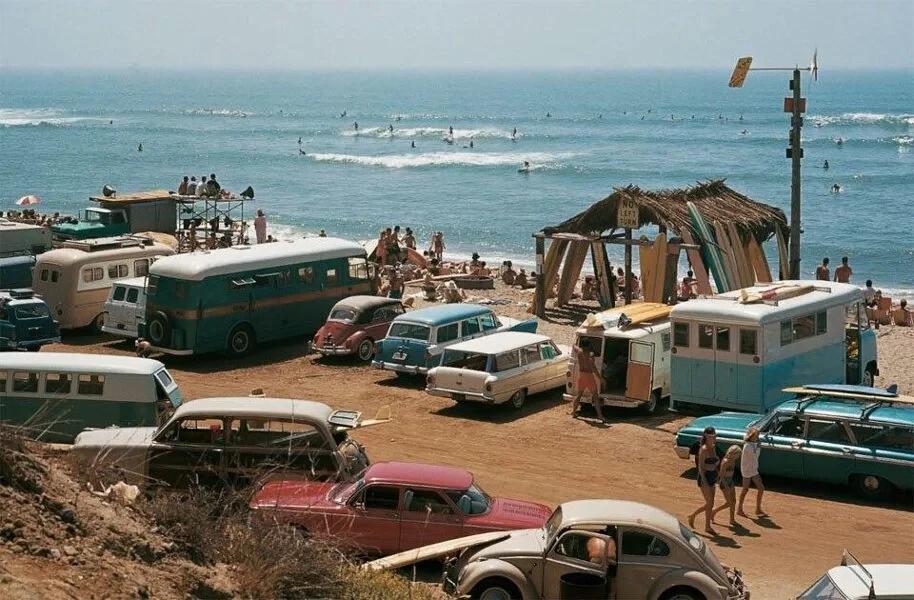
Surf cars deserved a category of their own. Station wagons. Old vans. Rusty four-wheel drives. Anything that could carry a few boards and hopefully make it home again. Air-conditioning was optional and a working radio was a bonus. There were permanently wet towels somewhere in the back, sand covering every surface and probably a couple of blocks of half-melted wax rolling around under the seats. The car didn't have to look good, it just had to get you to the beach and maybe back as well.
Somehow those old cars became part of your surfing story. You remember the waves but you also remember the vehicle you chased them in.
YOUR BOARD WASN'T ALWAYS PERFECT EITHER
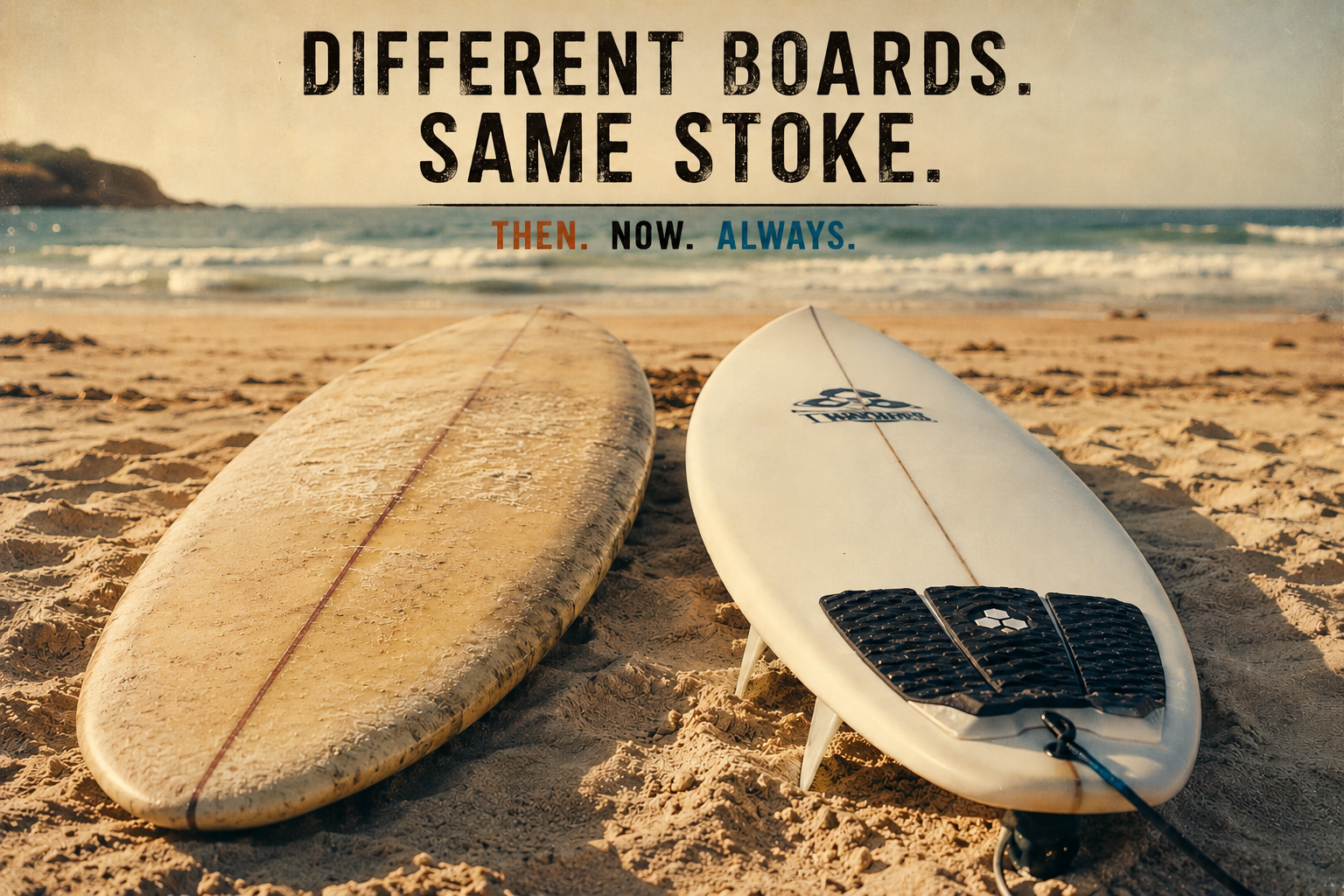
Surfboards weren't disposable. You rode them. You dinged them. You repaired them. Then you dinged them again. A board might have yellowed glass, a questionable repair job and enough pressure dents to resemble the surface of the moon. Didn't matter, if it worked, you surfed it. And through the 70s, 80s and 90s, boards changed enormously.
Single fins gave way to twins. Twins gave way to thrusters. Boards became shorter, faster and more responsive. Every generation thought they'd discovered something revolutionary and every generation probably did.
Today the variety of surfboards available is incredible. Mid-lengths. Twins. Quads. Fishes. Longboards. High-performance shortboards. Interestingly, some of the designs surfers are excited about today have their roots firmly planted in those earlier decades, everything comes around again but usually with a slightly higher price tag.
SURF FASHION WAS LOUDER
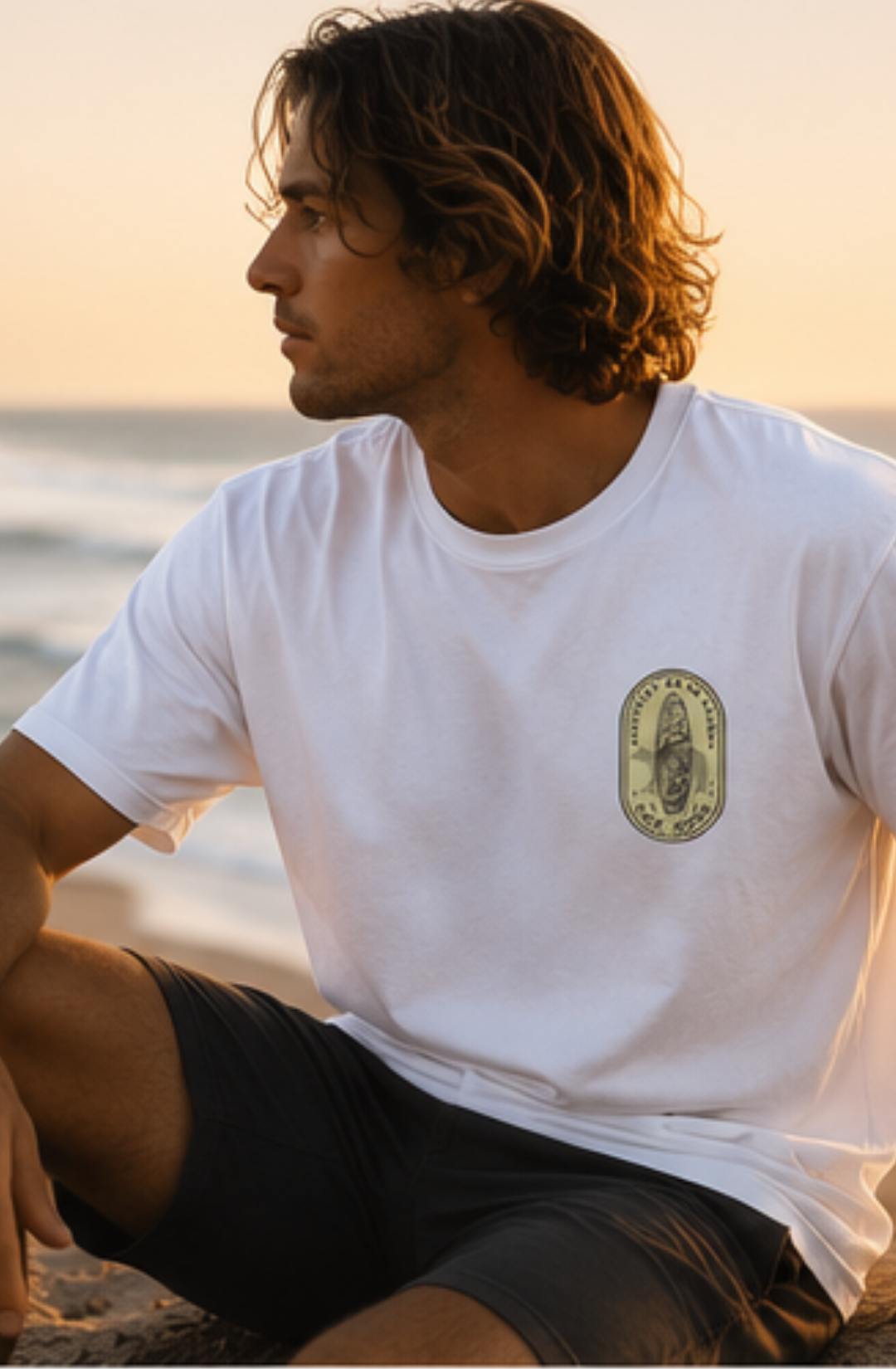
Then there were the clothes. Surfing in the 70s, 80s and 90s wasn't exactly known for subtlety. Big bold logos, bright colours, stripes, checkerboards, fluoro, oversized tees, tiny shorts and to top it off some truly magnificent sunglasses. Hairstyles that probably looked better after three hours in salt water.
Surf brands weren't just clothing companies either. They represented tribes. What you wore said something about the surfing you were into, the surfers you followed and the culture you wanted to be part of. Surf magazines, stickers and VHS videos carried those brands around the world. There was no scrolling through hundreds of new designs every night. You might see a tee in a magazine or hanging in your local surf shop and think: That's bloody cool. And that was enough.
TODAY'S SURFING IS PRETTY BLOODY GOOD TOO It's easy to romanticise the past. Memory has a habit of removing the bad bits. We remember uncrowded waves but forget the terrible wetsuits. We remember spontaneous road trips but forget getting stranded because someone's car wouldn't start. We remember the freedom but perhaps forget how difficult it was to learn anything.
Surfing today has plenty going for it. Boards are incredible. Wetsuits are warmer and more flexible. Forecasting is ridiculously accurate compared with what we once had. You can learn about technique, equipment and ocean safety faster than ever. Women and girls have a far stronger and more visible place throughout surf culture and professional surfing. Surfers are riding everything from traditional logs to futuristic performance boards. And you can watch incredible surfing from almost anywhere in the world within seconds. Then there are wave pools — something that would have sounded completely ridiculous to most surfers a few decades ago. The sport has evolved. That's what surfing does.
BUT MAYBE WE DON'T NEED TO POLISH EVERYTHING
There's something worth keeping from the old days. The spontaneity. The adventure. The imperfection. The willingness to paddle out without knowing exactly what the next two hours will deliver. Maybe every surf doesn't need to be optimised. Maybe you don't need to know the exact swell period before leaving the driveway. Maybe occasionally you just throw a board in the car and go have a look. Check one beach then another, grab a coffee, talk some rubbish, eventually find a wave.
Because the best surf sessions aren't always the ones with the highest rating on the forecast. Sometimes they're the completely unexpected ones.
SURFING CHANGES. THE FEELING DOESN'T.
Boards have changed. Cars have changed. Clothes have changed. Forecasting has changed. Surf culture has certainly changed. But there's one part that hasn't.
That little feeling when you come over the hill and see lines marching towards the coast.
When someone in the car says: "It's on."
Suddenly you're trying to get your wetsuit on faster than physically possible. You're waxing the board. Running across the sand. Paddling towards the first set. For all the technology, progression and polish that's arrived over the decades, surfing still manages to bring us back to something incredibly simple.
Maybe surfing was a little rougher around the edges back then. That's worth remembering. But the good news is those edges haven't completely disappeared. You just have to go looking for them.
Surf is life.
Grizzly Bear Surf — Queensland, Australia